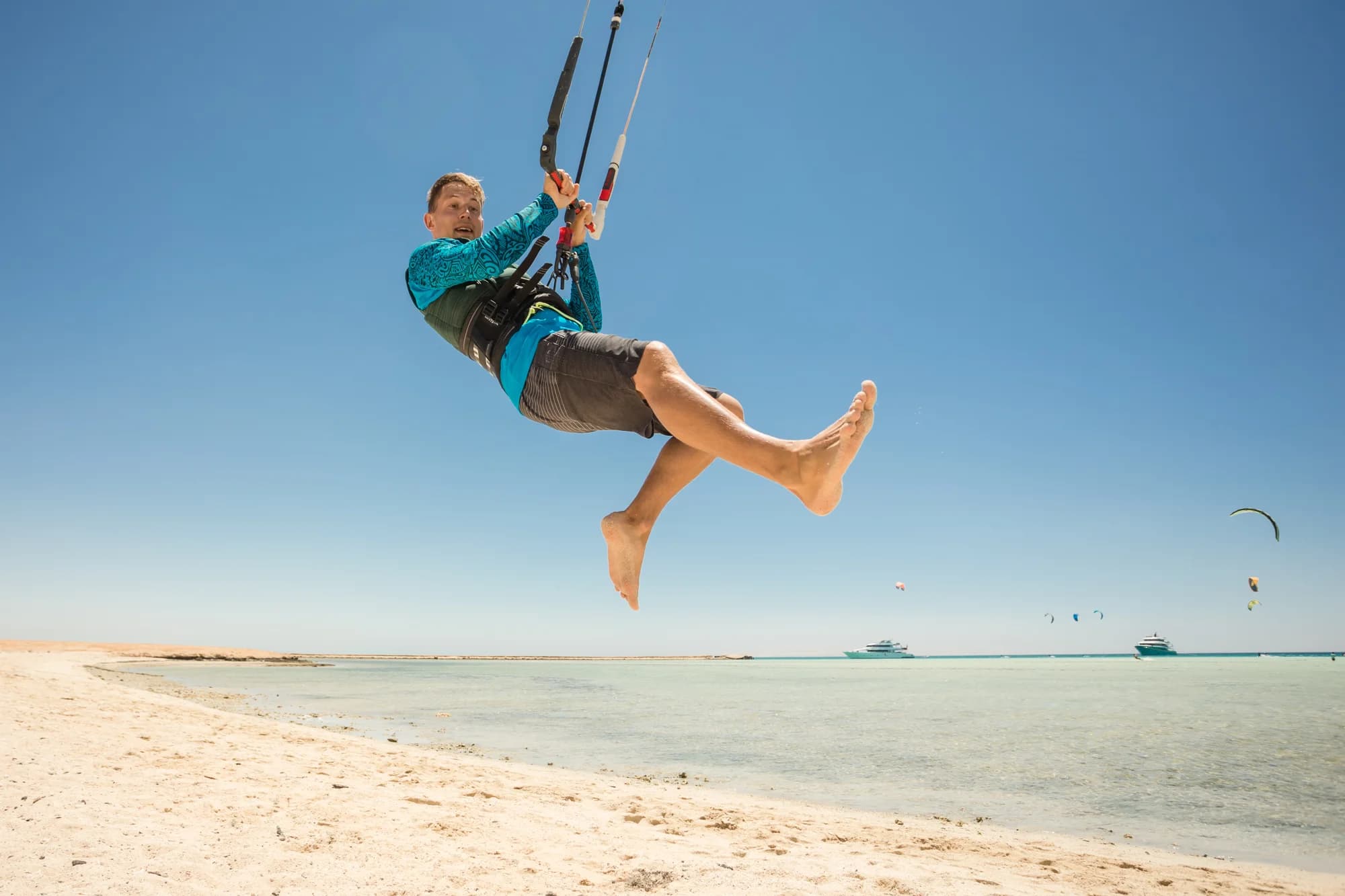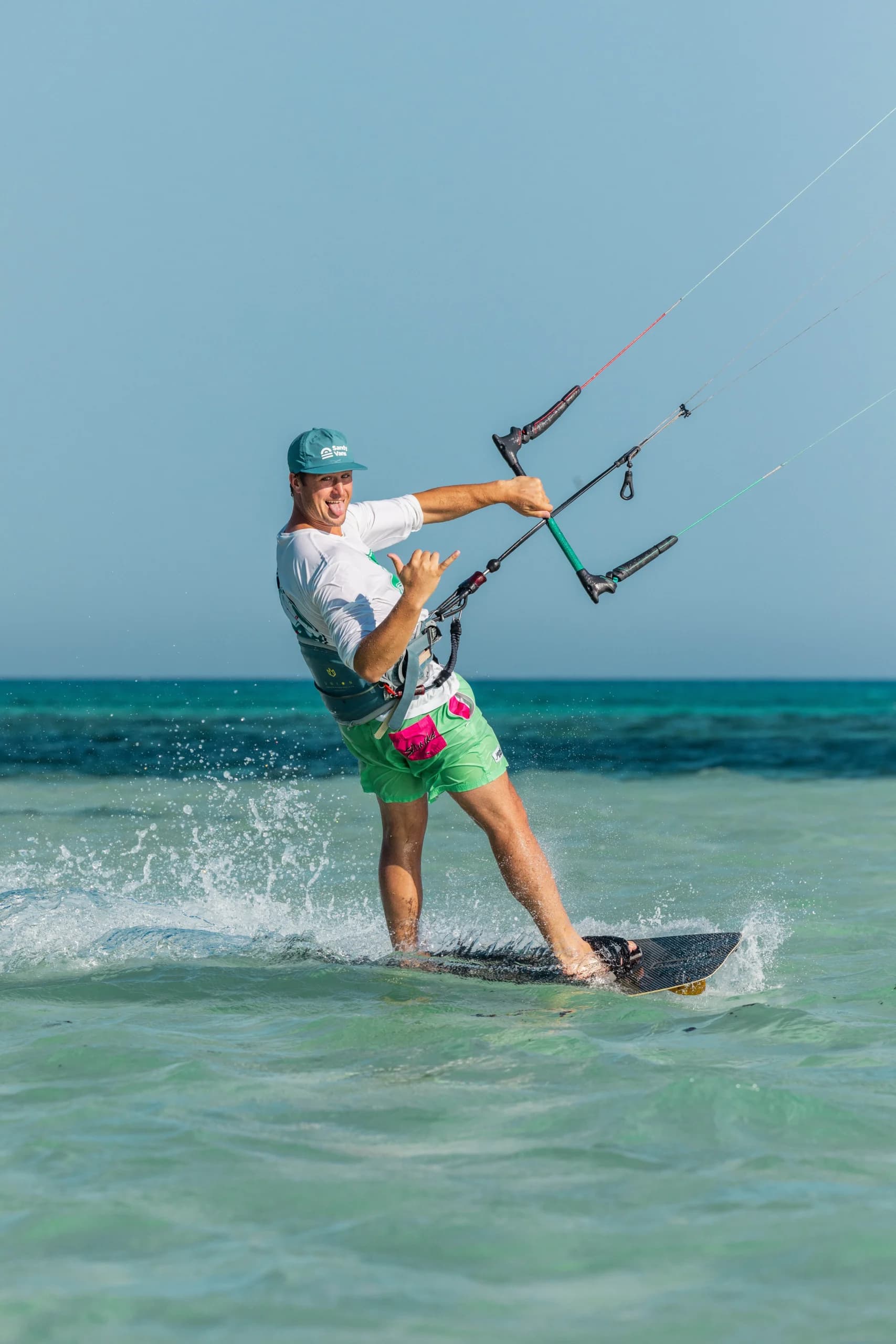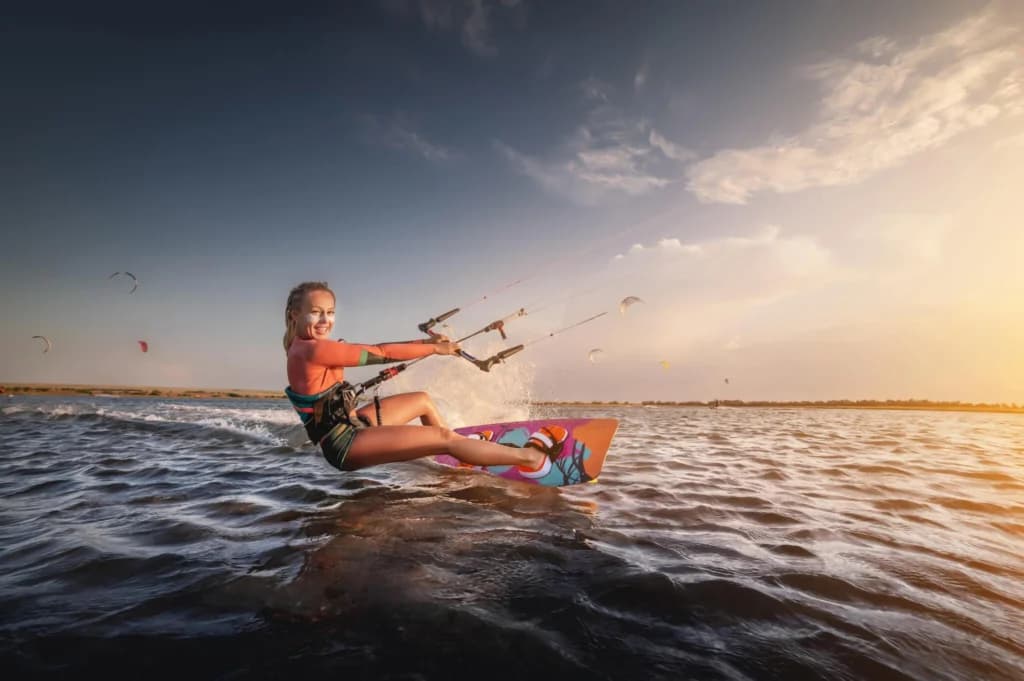
Hurghada and El Gouna sit 25 km apart on the same stretch of Egyptian coast and receive essentially the same northerly wind. The real differences are crowding, cost, water access and logistics. El Gouna offers a compact, polished resort environment with one very busy main kite beach; Hurghada offers more space, lower prices, faster airport access and boat routes to island lagoons that El Gouna day trippers have to drive to reach.
The wind is the same. The geography is not
Both towns sit under the same synoptic northerly to north-westerly flow funnelled down the Gulf of Suez, and both get the daily thermal reinforcement that makes the summer here so reliable. On any given day the forecast for one is a good forecast for the other.
Where they differ is local geometry. El Gouna sits inside a bay with a headland and a large lagoon system, which smooths the wind and turns the northerly into a clean side-onshore at the main beach. Some of Hurghada's spots sit more exposed to the open bay and feel more of the acceleration coming out of the Strait of Gubal, which can mean a knot or two more and slightly more chop on the strongest afternoons.
That difference is real but marginal. Do not choose a base on wind statistics. Choose it on everything below.
Water and what you stand on
El Gouna's Mangroovy Beach is the reference point: a wide sandy bay, shallow for a long way out, side-onshore wind, no reef in the immediate riding area. For a beginner it is close to ideal terrain, and that is exactly why it is so busy.
Hurghada is more varied. There are shallow sandy training lagoons that match anything in El Gouna, and there are spots with reef patches where booties are non-negotiable. Which one you ride depends on the school and the day. The upside of that variety is that Hurghada schools can move you to the spot that suits your level and the wind angle rather than always using the same beach.
Crowds and space
This is the single biggest practical difference in peak season.
Mangroovy in July and August is one of the busier kite beaches in the region. That means a crowded launch area, a lot of downwind traffic, and less margin for error while you are learning. If you are working on your first upwind runs, a crowded lineup is a genuine handicap — you spend attention on avoidance rather than technique.
Hurghada's kite operations are spread over a longer stretch of coast and across several beaches and lagoons, so pressure per spot is lower. Add the boat spots and the difference gets larger.
The boat spots are the real advantage
North of Hurghada sit a group of low sandy islands with shallow turquoise lagoons on their leeward sides: Abu Mungar (Abu Moungar), Gessum, and further out the Giftun Islands. These are reachable by boat as a day trip from Hurghada, and they are the best flat water in the region. Further north again, Tawila Island and the Ashrafi group in the Strait of Gubal are the classic kite safari stops, and Hurghada is the standard departure port for those trips.
That geography favours a Hurghada base for anyone who wants island days or a liveaboard week. You can reach the same spots from El Gouna, but you begin the day with a drive.
Cost, transfers and getting around
What a week costs
El Gouna is a purpose-built resort town with resort pricing. Accommodation, restaurants, transport and rental all tend to sit higher than in Hurghada, sometimes considerably so. It buys you a clean, walkable, low-friction environment where everything is in one place and everyone speaks English.
Hurghada is a working Egyptian city with a tourism sector attached. Accommodation runs the full range from budget to five star, food is cheaper, and you get a more genuine sense of being in Egypt. It is bigger and less tidy, and getting between places usually means a taxi rather than a walk.
Neither is objectively better. It is a question of whether you want a resort week or a trip.
Getting there and moving around
Hurghada International (HRG) sits within the Hurghada urban area, so most hotels are a 10 to 20 minute drive from arrivals. El Gouna is roughly 25 to 35 minutes from the same airport depending on traffic and where in the town you stay.
For transfers to lessons, we include hotel pick-up and drop-off free of charge inside Hurghada. Makadi, Sahl Hasheesh and El Gouna carry a €20 per car surcharge, which reflects the extra distance rather than anything else. If you are basing in El Gouna and taking lessons in Hurghada, factor that daily drive into how you feel about your schedule.
Which suits which rider?
Choose El Gouna if:
- You want everything within walking distance and a resort atmosphere
- You are travelling with non-kiting family who want restaurants, pools and shops in one place
- You do not mind sharing a busy beach in high season
- Budget is not the deciding factor
Choose Hurghada if:
- You want island and boat spots, or you are joining a kite safari
- You want more spot variety as your level progresses
- You want a lower cost base for a week or longer
- You want the shortest airport transfer
- You prefer a less crowded lineup while learning
What about Safaga and Soma Bay?
Both sit south of Hurghada and both deserve a mention because they change the calculation for some riders.
Soma Bay is around 45 km south: a large, shallow, sandy bay with a long-standing watersports reputation and excellent flat water. Safaga is around 55 to 60 km further along, historically a windsurfing centre, known for consistent strong wind and open flat water. Both are quieter than El Gouna, both are further from the airport, and both have fewer independent operators.
For a first trip, base in Hurghada or El Gouna and treat Soma Bay or Safaga as a day trip if the wind angle suits. For a returning rider who wants space above everything else, they are a serious option.
Short version: El Gouna is the easier holiday, Hurghada is the better kiting base. If your priority is water time and spot variety rather than resort convenience, stay in Hurghada.
- el gouna
- hurghada
- spots
- destinations